Back to Malmo
Möllevången
Malmö's colorful and rough diamond. "Möllan" is the place where cultures from all over the world blend into a fragrant, intense mix.
Möllevången is Malmö without a filter. In other parts of the city, you can sometimes experience a sanitized, curated version of multiculturalism — in Möllan you encounter the original. It is a place where seventy nationalities live wall to wall, whose pulse beats stubbornly around the clock, six days a week, to the cacophonous but wonderfully alive soundtrack of market calls, spice pots, and blended music cultures.
Historically, Möllevångstorget was one of Malmö's most important squares during the socialist movement of the early 20th century. The sculpture group at the center of the square, created by Axel Ebbe in 1926, depicts four tormented working brothers carrying a heavy stone load — a tribute work to Malmö's industrial workers. Immediately beneath these figures were held communist meetings and union demonstrations. The area around the square was long a stronghold for the industrial working class.
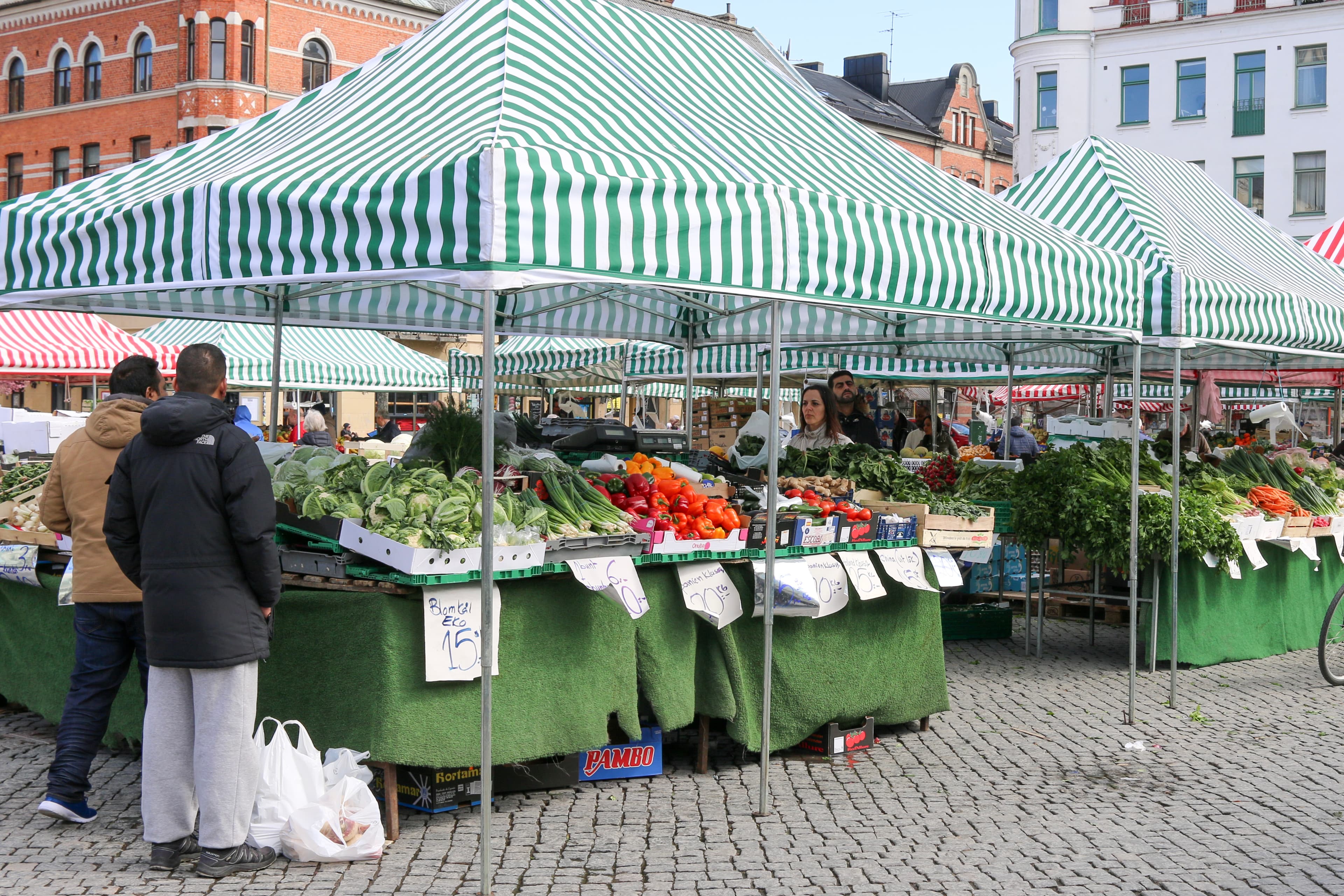
Today class is still a theme, but it is ethnicity and culinary geography that dominate the urban landscape. Möllevångstorget's market offers, six days a week, a range of products that an ordinary Swedish supermarket cannot even dream of: bitter melon and tamarind, napa cabbage and Persian herbs, spice blends whose names do not exist in Swedish dictionaries. Price levels are democratic — here one shops not because it is exotic, one shops because it is what one eats.
In the evenings, Möllan changes its register. Pubs and restaurants rooted in the Middle East, Asia, and Latin America open their doors and the small street around the square fills with a crowd of students, pensioners, and night workers who can all share a good falafel meal and a cold beer beneath the branching old maple trees.
Read more & useful links
Explore events and experiences in Möllevången
See events in Malmo